





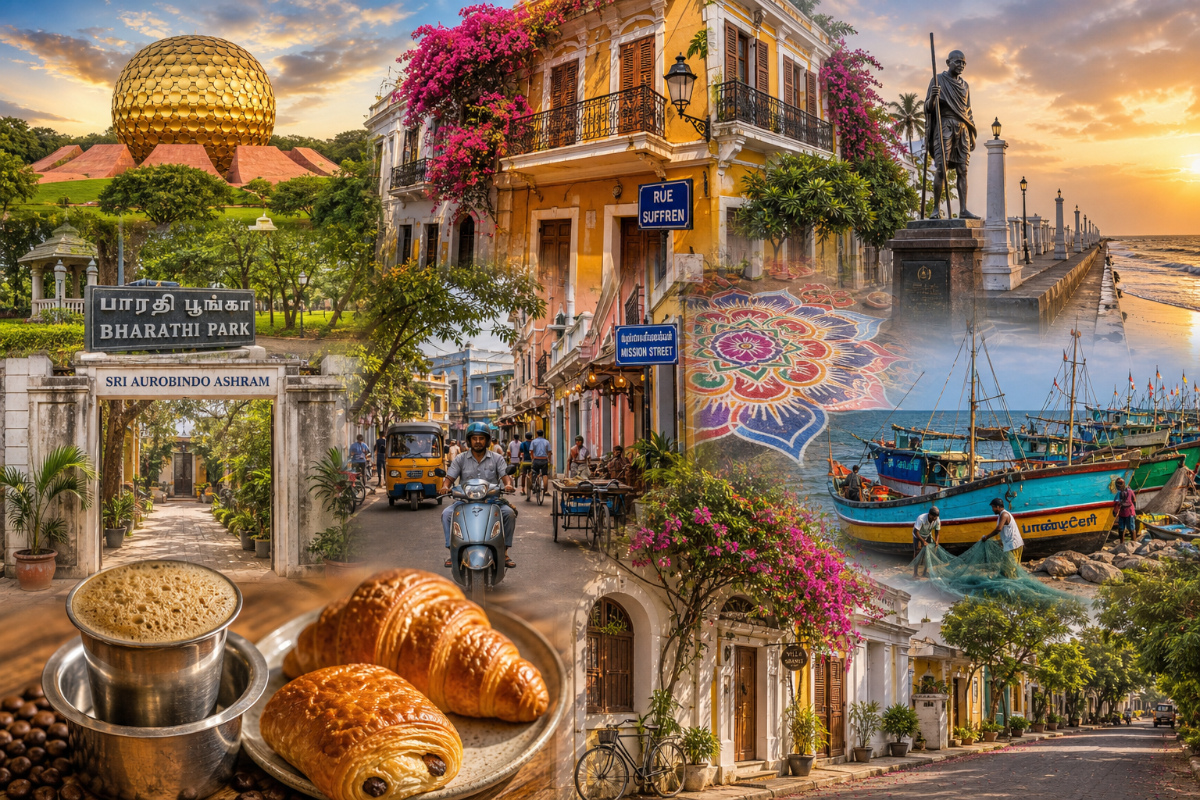
Pondicherry doesn’t feel like the rest of India, and that’s the point. That’s why I wrote this Top 5 Things to See in Pondicherry.
There’s a moment, usually somewhere along the seafront promenade or under the shade of a mustard-yellow colonial villa, when things slow down. The traffic noise softens, the streets feel more ordered, and suddenly you’re not navigating chaos, you’re wandering.
Once a French colony, Pondicherry (or Puducherry) still carries that influence in its architecture, food, and rhythm. But don’t expect a European transplant. It’s something more layered than that, Tamil soul wrapped in colonial geometry.
The best way to explore it is on foot or by bicycle, moving between neighborhoods where the mood shifts block by block.
Here are five places that capture what makes Pondicherry worth lingering in.
1. The Promenade & Gandhi Statue, Free
Start early. The promenade belongs to walkers at sunrise.
Stretching along the Bay of Bengal, this is where Pondicherry wakes up. Locals stroll in groups, joggers move past at steady pace, and the sea, restless and loud, crashes against the rocky shoreline.
At the center of it all stands the Gandhi Statue, framed by eight granite pillars. It’s simple, almost understated, but it anchors the entire stretch. People gather around it without really thinking about it, meeting point, landmark, pause in the walk.
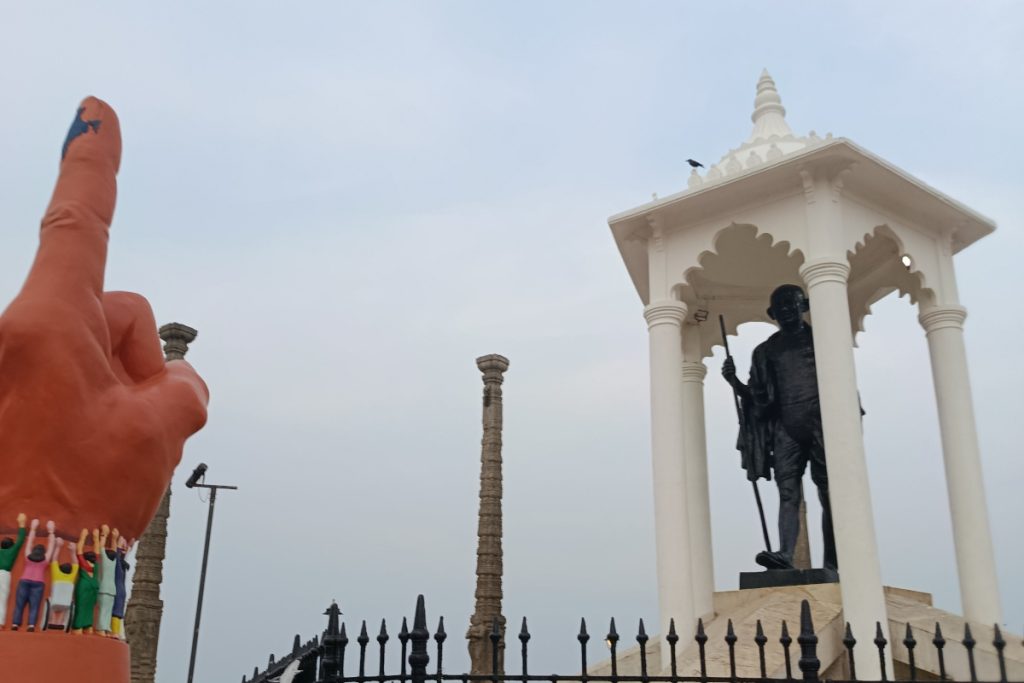
There’s no beach here in the traditional sense, just rocks and waves, but that’s part of the appeal. It feels less like a place to lounge and more like a place to pass through slowly.
A few steps away, you’ll find colonial-era buildings, statues of French figures, and cafés opening their shutters for the day. Come back in the evening and the energy shifts, street performers, families, and travelers all converge here.
It’s not a “sight” in the traditional sense. It’s where you tune into the city.
2. White Town (French Quarter), Free
From the promenade, drift inland into White Town, and you’ll feel the transition immediately.
The streets run in a neat grid. Buildings are painted in soft pastels, yellows, blues, whites, with bougainvillea spilling over compound walls. Wooden doors, arched windows, and quiet courtyards sit behind understated facades.
It’s easy to romanticize this area, but it works because it’s still lived in. Government offices, boutique hotels, cafés, and private homes all share the same streets.
Walk without a plan.
Rue Suffren, Rue Romain Rolland, and Rue Dumas are good starting points, but the smaller streets often feel more rewarding. You’ll stumble across art galleries, bakeries, and shaded corners that seem designed for doing nothing.
Stop for coffee. Pondicherry does cafés unusually well, a legacy of its French past, but also a reflection of its slower pace.
This is also where you start to notice the contrast. Just beyond the canal lies the Tamil Quarter, busier, louder, more traditionally Indian. The two sides don’t clash; they coexist.
And walking between them is part of understanding the city.
3. Sri Aurobindo Ashram, Free
A short walk from White Town, the Sri Aurobindo Ashram offers a completely different atmosphere.
Founded in the early 20th century by Sri Aurobindo and Mirra Alfassa (known as “The Mother”), the ashram isn’t built around spectacle. There are no grand structures or dramatic rituals.
Instead, it’s quiet. Intentionally so.
Visitors move in near silence through shaded courtyards, where the samadhi (tomb) of Sri Aurobindo and The Mother sits covered in flowers. People pause here, some for a few seconds, others for much longer.
Even if you’re not drawn to spirituality, the stillness is noticeable. After the movement of the streets outside, it feels like stepping into a different tempo.
There are rules, modest dress, no photography, silence, and they’re enforced gently but firmly.
This isn’t a place to “do.” It’s a place to stop doing.
4. Auroville, Free entry (some activities paid)
About 10–12 km from Pondicherry, Auroville is often misunderstood.
It’s not a tourist attraction in the usual sense. It’s an experimental township founded in 1968, built around the idea of human unity, people from different countries living together beyond nationality, politics, or religion.
That sounds abstract, and parts of it are. But visiting Auroville gives you something tangible to engage with.
The focal point is the Matrimandir, a large golden sphere set within landscaped gardens. You can’t just walk in, access is controlled, and if you want to enter the inner chamber, you’ll need to book in advance.
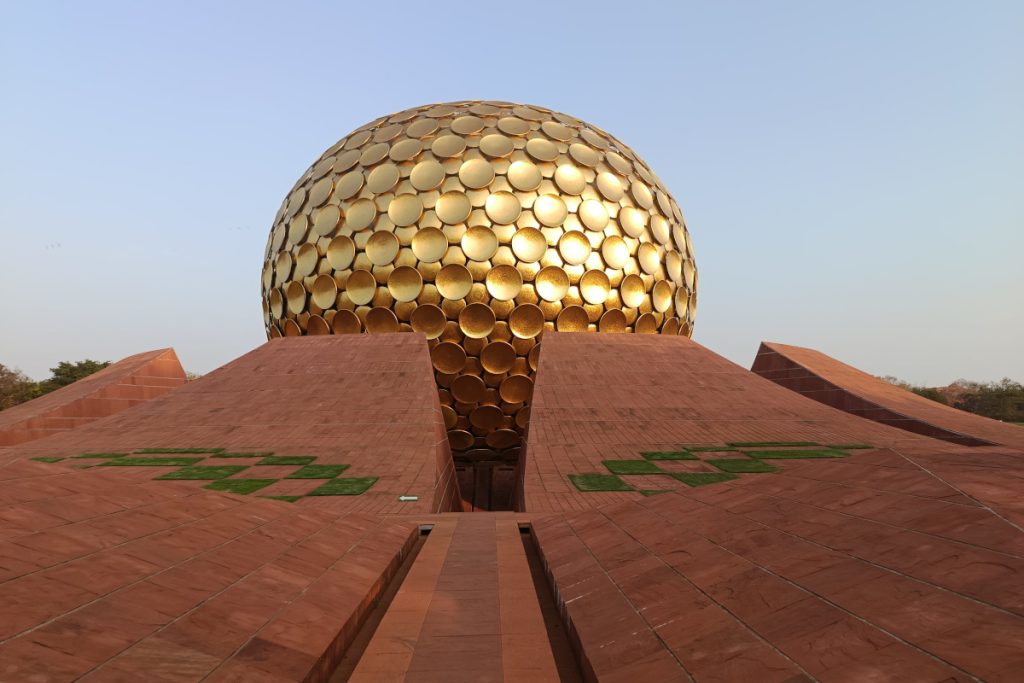
Most visitors view it from a designated area after stopping at the visitor center.
The experience isn’t about ticking off a landmark. It’s about the environment around it: quiet pathways, experimental architecture, community cafés, and small workshops selling handmade goods.
Rent a bicycle or scooter and explore beyond the main entrance. That’s where Auroville starts to feel less like an idea and more like a place people actually live.
It won’t resonate with everyone, but it doesn’t try to.
5. Tamil Quarter & Local Markets, Free
Cross the canal and the mood changes instantly.
The Tamil Quarter trades symmetry for energy. Streets are busier, colors are brighter, and daily life spills out into the open. Houses here follow traditional Tamil architecture, long verandas, inner courtyards, and richly decorated entrances.
This is where Pondicherry feels closest to the rest of Tamil Nadu.
Walk through local markets and smaller streets where vendors sell everything from flowers and spices to household goods. The smells shift constantly, jasmine, incense, frying snacks.
You’ll find temples tucked between homes, auto-rickshaws weaving through narrow lanes, and দোকা (small shops) that seem to have been there forever.
If White Town shows Pondicherry’s colonial layer, the Tamil Quarter shows its foundation.
Spend time here without rushing. Sit at a small eatery, order something simple, idli, dosa, or a thali, and watch the rhythm of the street unfold.
Practical Tips for Exploring Pondicherry
- Best way to get around: Walking or renting a bicycle/scooter. Distances are manageable, especially in White Town.
- Best time to visit: Early mornings and late afternoons. Midday heat can be intense.
- Dress modestly when visiting the ashram or temples.
- Cash vs card: Cards are accepted in cafés and hotels, but smaller shops prefer cash.
- Stay location: White Town if you want atmosphere; outside it if you want lower prices.
Why this Top 5 Things to See in Pondicherry
Pondicherry isn’t about big sights or bucket-list attractions.
It’s about contrast and pacing.
You move from sea to street, from colonial calm to Tamil energy, from café culture to spiritual quiet, often within a few minutes of walking.
Nothing here demands your attention loudly. It reveals itself gradually, in details: the color of a wall, the taste of strong coffee, the sound of waves hitting stone instead of sand.
Give it time.
Because Pondicherry isn’t a place you conquer in a day, it’s one you settle into, almost without noticing.
Learn more about India
- 4 Lessons
- 0 Students
Learn about India and turn your wanderlust into a well-planned adventure, travel smarter, cheaper, and with less stress.
- Know what you need to know
- Avoid rookie mistakes
- Tools to plan like a pro
- Unlock hidden gems